The Men Behind the Girl Behind the Man Behind the Gun
Sex and Motivation in the American Morale Campaigns of the First World War
Abstract
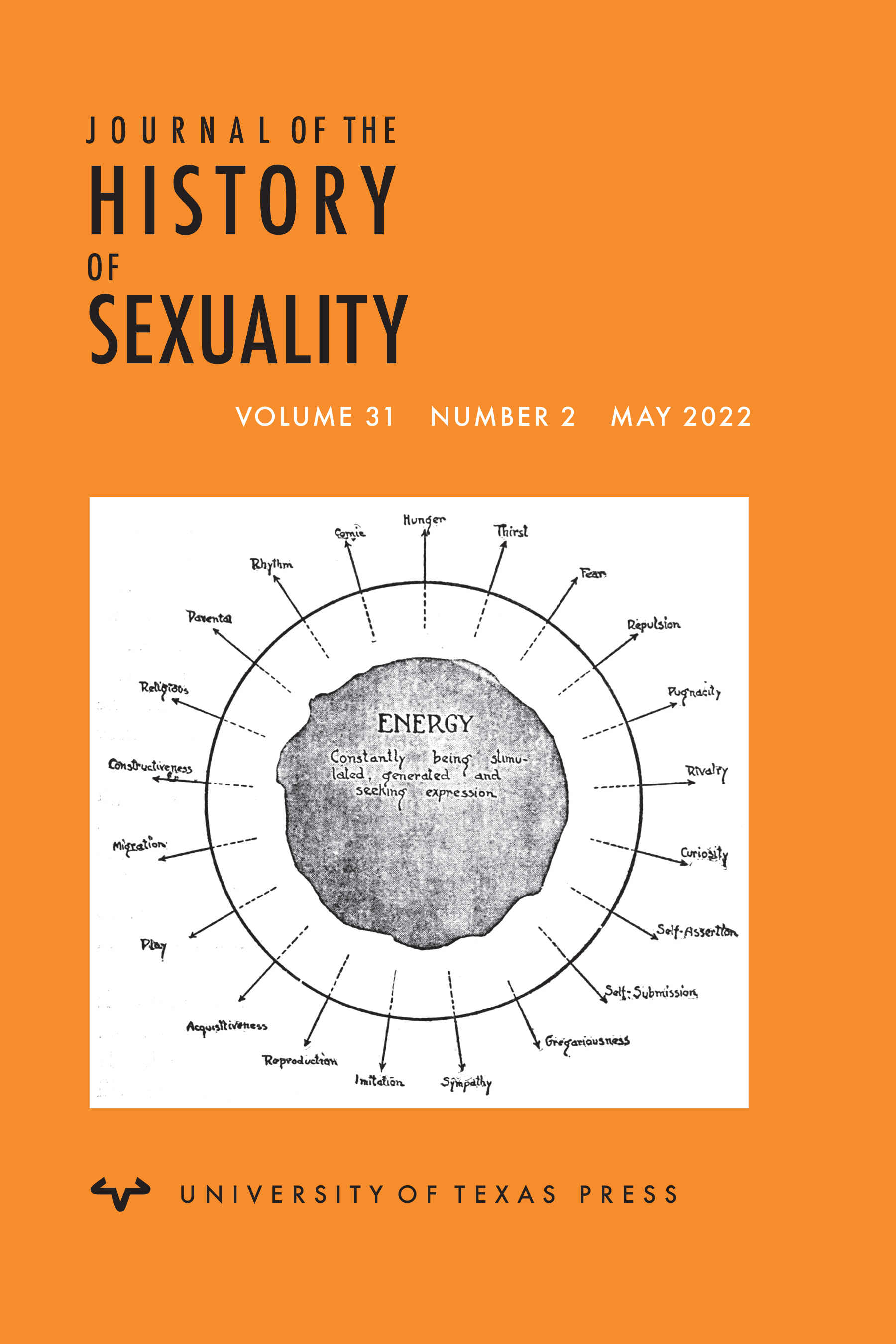
During the First World War, the United States War Department assiduously regulated the sexuality of soldiers and many citizens residing in the vicinity of training camps—a task that it accomplished largely through an organization called the Commission on Training Camp Activities (CTCA)—a War Department-directed umbrella agency that was composed of both governmental divisions, such at the agency’s Law Enforcement Division, and civic organizations, such as the Young Men’s Christian Association. Historians have generally focused on the repressive aspects of this agency’s sexual control programs, and argued that their primary goal was to instill sexual morality among the soldiers and wider society. In a departure from this interpretation, the present article shows that while sexual morality rhetoric (and the specter of venereal disease) was certainly an important part of the CTCA’s strategy for combatting what they deemed to be wayward sexual activity, it was, for the agency’s top leaders, less decisive than motivating soldiers to fight, which involved remaking the overall sexual environment of training camps in such a way that drafted men would be compelled to lean into their wartime roles. Drawing on the relatively neglected archival records of the Military Morale Section and the Morale Branch of the army’s General Staff—which exercised control over the CTCA during the decisive final months of the war, as well as the publications of a number of morale strategists who formulated the CTCA’s motivational strategy--this article demonstrates that the War Department did not just repress sexuality, but actively sought to arouse, control and channel the soldiers’ desire for it in order to build up their “vigor” and get them to fight and to endure. As this article demonstrates, the CTCA’s leadership embraced a motivational strategy—penned by the morale strategists—that involved using enforced sexual abstinence and the simultaneous exposure of soldiers to women in supervised settings where they could not engage in sex, because they believed that motivation was intrinsically tied to men’s “energy” levels, which could be “dissipated” through sexual activity, but also aroused through stimulating experiences (so long as they did not conclude with sexual gratification) and channeled into their duties. The morale strategists who theorized the War Department’s approach to motivation claimed that chaste soldiers were much more suggestible and driven than sexually “dissipated” men—especially if the former could be plied, in their state of enforced restraint, with the encouraging appeals of women.