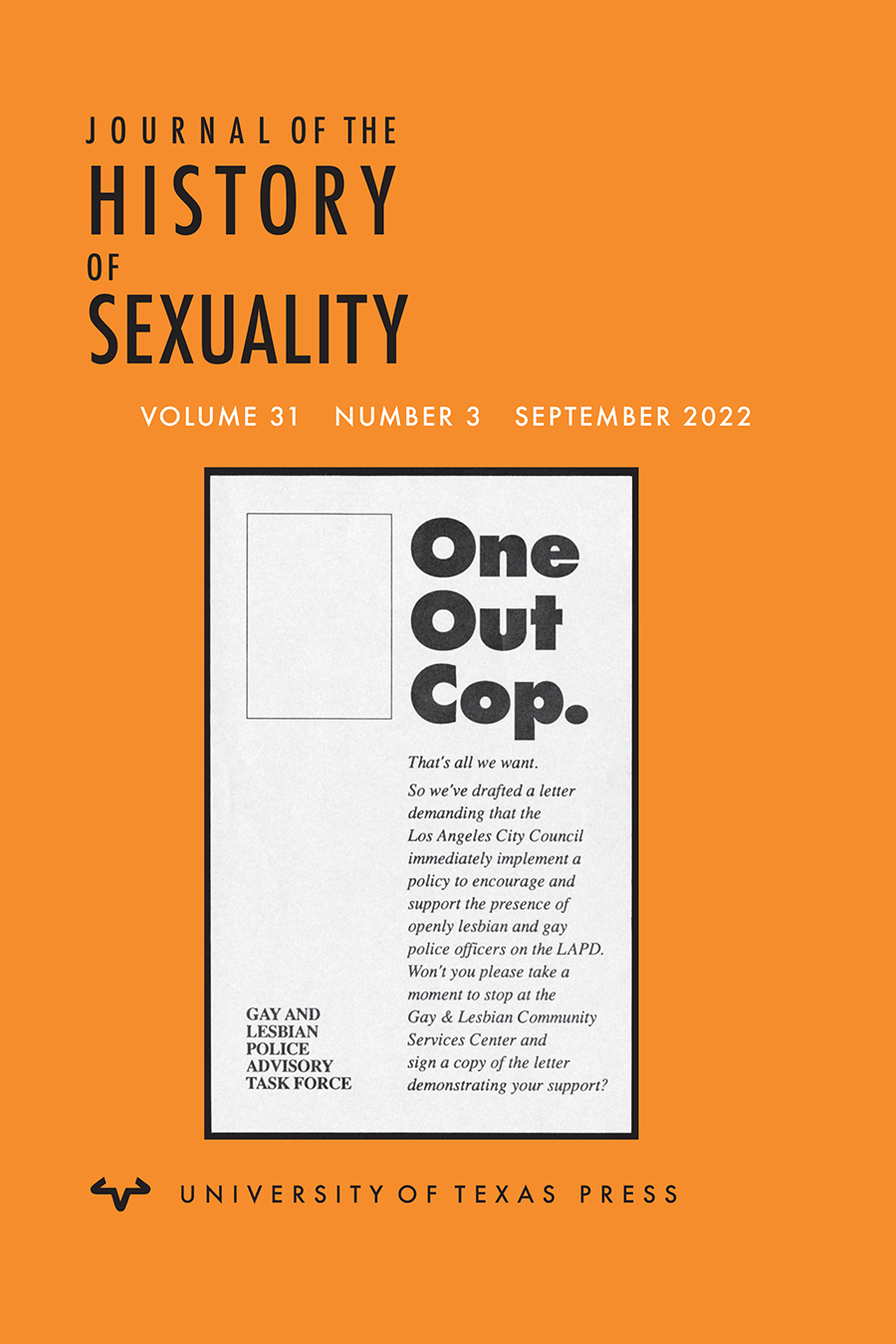
One Out Gay Cop
Gay Moderates, Proposition 64, and Policing in AIDS Crisis Los Angeles, 1969-1992
Abstract
Scholars often frame the early AIDS crisis as a manichaean battle between “liberal” gay activists and the “conservative” Christian Right that begins with AIDS’s 1981 discovery and ends with the 1997 distribution of antiretroviral medicines among some of the global population. Our essay complicates this narrative by examining gay moderate politics in Los Angeles between 1969-92, paying particular to gay moderate responses to the AIDS crisis and the War on Crime. Through connecting gay moderates’ 1986 defeat of Proposition 64, an anti-AIDS ballot initiative backed by the Christian Right, with their successful campaign pressuring the Los Angeles Police Department (LAPD) to recruit openly gay officers, we argue gay moderates organized closeted homosexuals to come out and join a gay tolerant “silent majority” of mostly white straight voters committed to privacy rights, sexual respectability, and capitalism. In doing so, they developed a shared discourse of racial-, sexual-, and gender conformity with respectable white heterosexuality to differentiate out gay identity, culture, and gay sex from other forms of homosexuality and same-sex sex still considered criminally suspect, diseased, and risky. Their activism eventually aligned HIV/AIDS public health objectives with the War on Crime to police queer, gender non-conforming, and poor people of color as both criminals and potential HIV carriers while protecting the privacy and property of sexually and civically responsible out white gays and lesbians and straight people, literally and figuratively, through an out gay cop.