Out in Print
The Underground Press and the Gay Liberation Counterpublic in the United States, 1965-1976
Abstract
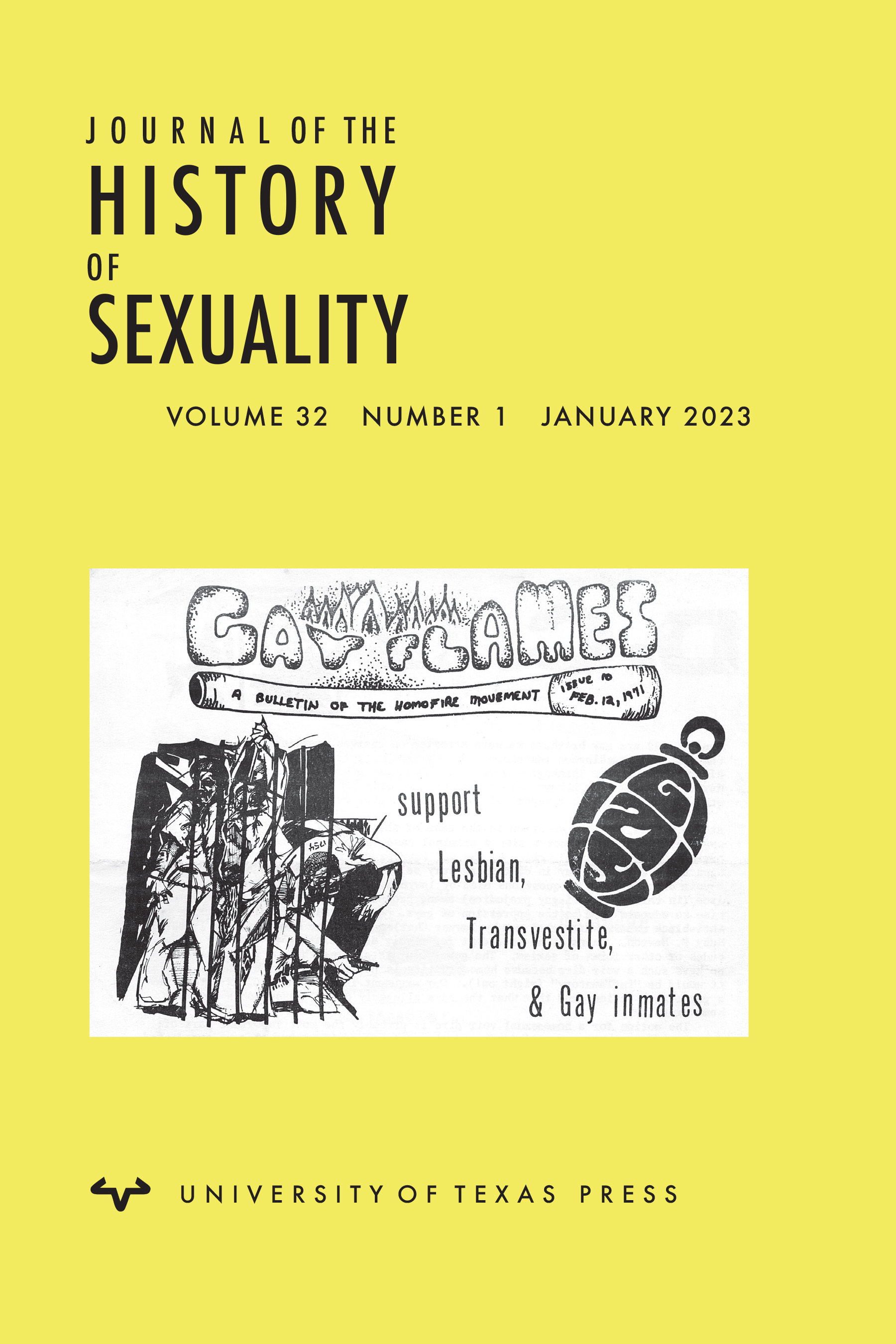
This article narrates the history of the underground gay liberation press from its emergence in the 1960s through its decline in the mid-1970s. Drawing on newspapers, magazines, newsletters, bulletins, and many obscure publications printed across the United States--as well as archival sources that illuminate their institutional histories--it shows that underground publications in particular provided gay and lesbian readers with access to an open venue where they could articulate their identities, interests, and needs. This “counterpublic” offered an alternative to a hegemonic public sphere from which their voices were excluded. Additionally, this article establishes continuity between the practices, personnel, and politics of the underground publications associated with the new left and the youth counterculture of the 1960s and the gay liberation press that emerged after Stonewall. In their institutional form, aesthetics, and political messaging, gay and lesbian underground newspapers from the late 1960s and early 1970s mirrored their radical precursors and transmitted their anti-authoritarian values to a gay and lesbian public. Furthermore, during the early years of gay liberation, these underground print networks spanned the country in a way that political organizations did not, connecting large numbers of gays and lesbians and exerting a profound influence on their personal and social identities. In order to demonstrate the social and geographic distance that these texts traveled, and their effects on readers, this article turns to writings by gay, lesbian, and transgender prisoners that have not previously been discussed by scholars. As early as 1970, prisoners used the underground press to publicize their grievances, ask for assistance, and organize politically. These overlooked interventions by the incarcerated reveal not just the scale, depth, and participatory nature of the gay liberation counterpublic, but also the expansive solidarities that it engendered. Lastly, this article examines the struggles of underground editors to remain culturally relevant and financially viable in a rapidly changing economic and political context over the first half of the 1970s, when large commercial competitors secured an increasingly dominant position, and a deradicalizing influence, within the gay and lesbian public sphere.